
Look Up. These 6 Ceiling Styles Change Everything.

Look Up. These 6 Ceiling Styles Change Everything.
Our recent reel about ceiling styles reached more than 2.5 million views, and we loved seeing how many of you were interested in something we think deserves much more attention in home design: the ceiling.
It’s easy to focus on flooring, cabinetry, lighting, and furniture when planning a home, but what happens overhead can completely change the way a room looks and feels. A ceiling can make a living room feel grand, bring warmth into an otherwise simple space, or add architectural character without changing a single wall.
And these details aren’t new. Many of the ceiling styles we still use today have roots in ancient and traditional architecture, each with its own shape, history, and personality.
Let’s take a closer look at seven styles, where they came from, and how we’d use them in a home today.
01 – Barrel Vault
Historical influence: Ancient Rome
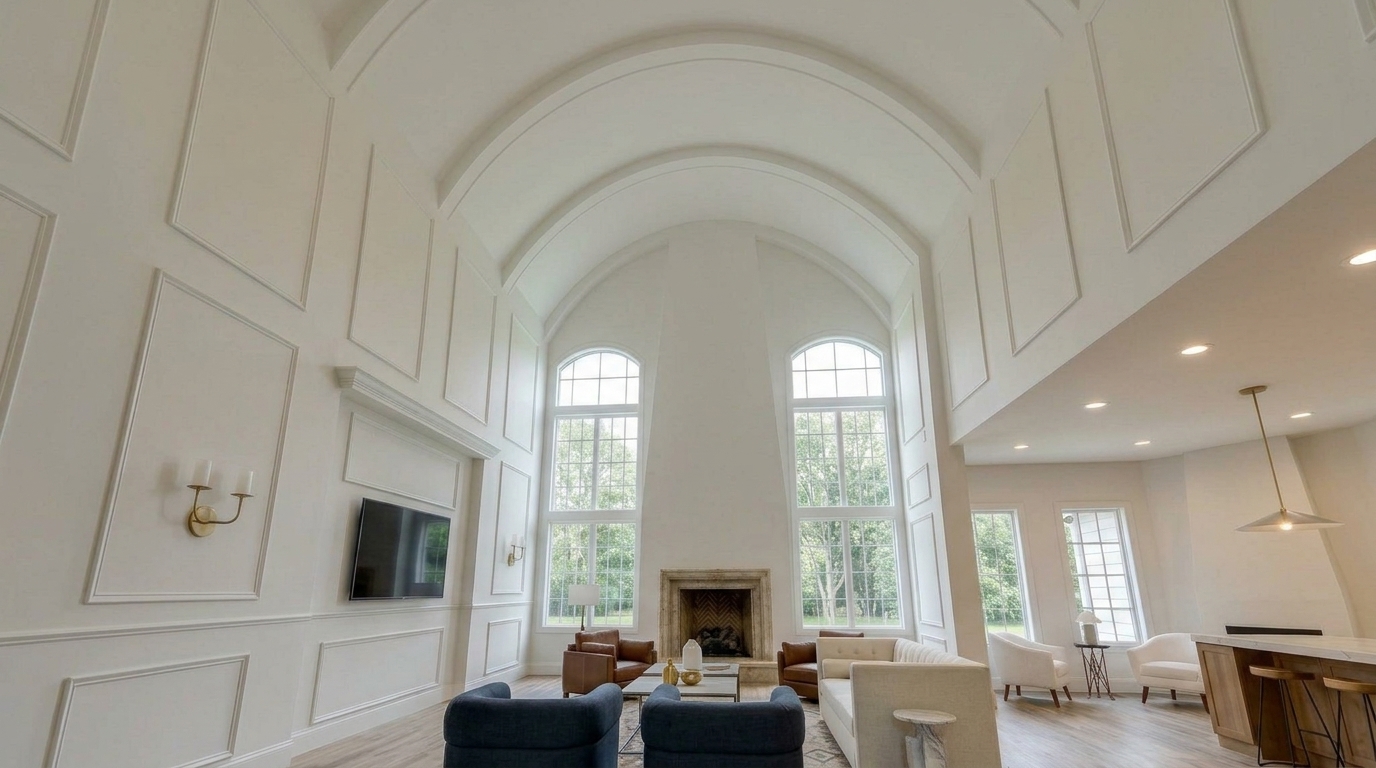
A barrel vault is a continuous curved ceiling that resembles the inside of a tunnel. The Romans used this form in bathhouses, corridors, and large public buildings, and today it can bring that same sense of scale and movement into a home.
Where we’d use it: Living rooms, entryways, hallways, and primary bathrooms.
Why we love it: The curved shape draws the eye through the room and adds architectural interest without relying on decorative finishes.
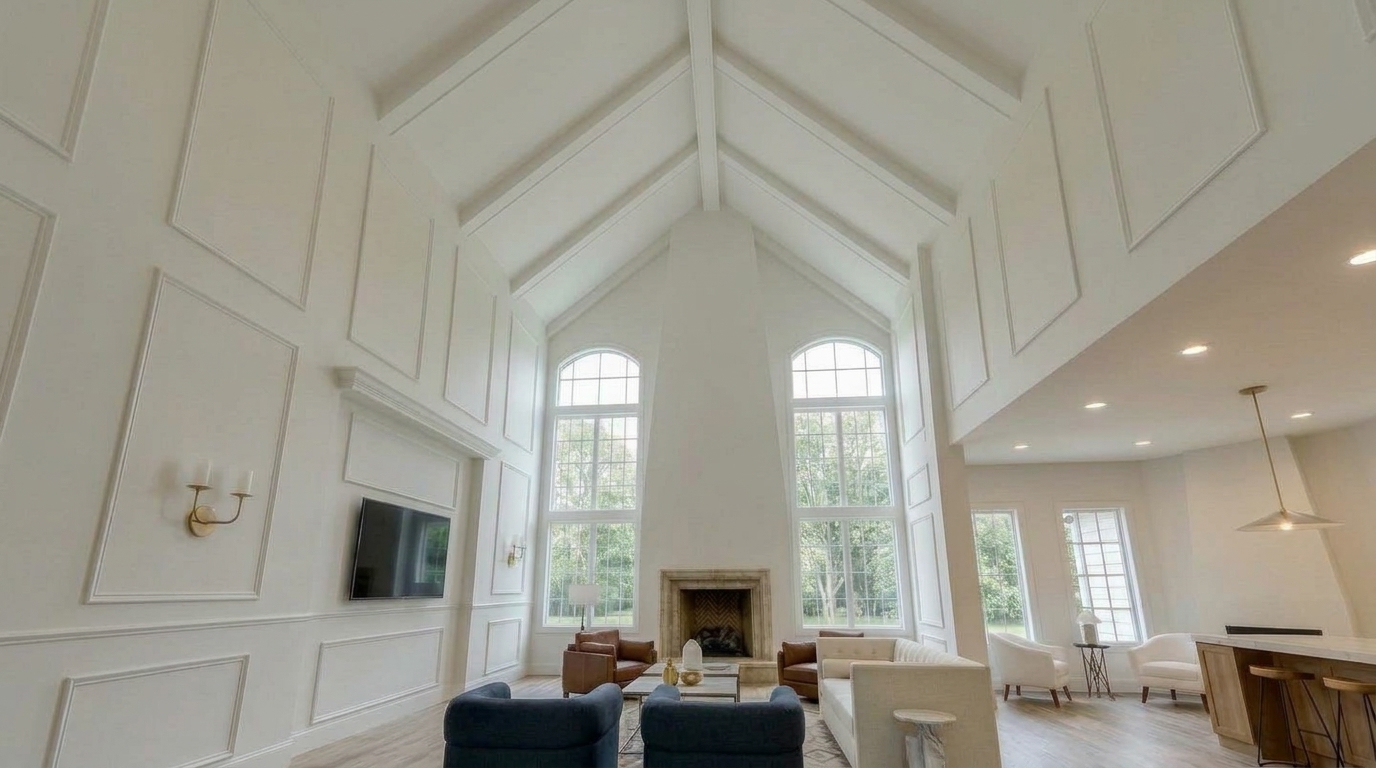
02 – Exposed Beam
Historical influence: Medieval European timber construction
Exposed beams began as structural elements in traditional timber-framed buildings. Today, they bring warmth, texture, and a sense of craftsmanship to residential interiors.
Where we’d use it: Great rooms, kitchens, dining rooms, and vaulted living spaces.
Why we love it: Natural wood beams can make a large room feel warmer and more inviting. They work just as beautifully in a European-inspired home as they do in a modern space.
03 – Box Beam
Historical influence: Traditional timber construction and Tudor-inspired interiors
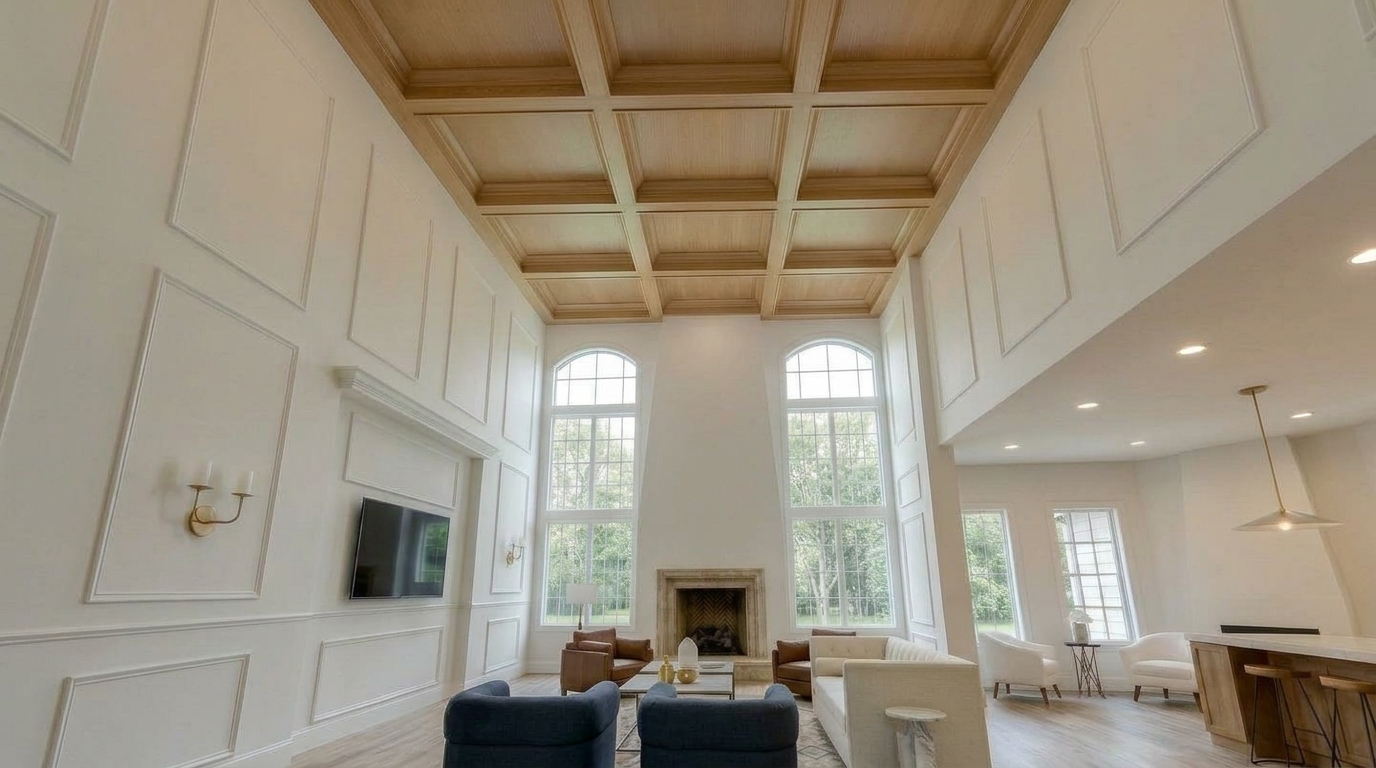
Box beams create the look of substantial beams crossing the ceiling, forming rectangular sections. Unlike exposed structural beams, these are often decorative elements built to add dimension and visual structure.
Where we’d use it: Living rooms, kitchens, dining rooms, and home offices.
Why we love it: They add architectural detail and rhythm overhead without requiring a fully vaulted ceiling.
04 – Groin Vault
Historical influence: Ancient Rome, later developed in medieval architecture
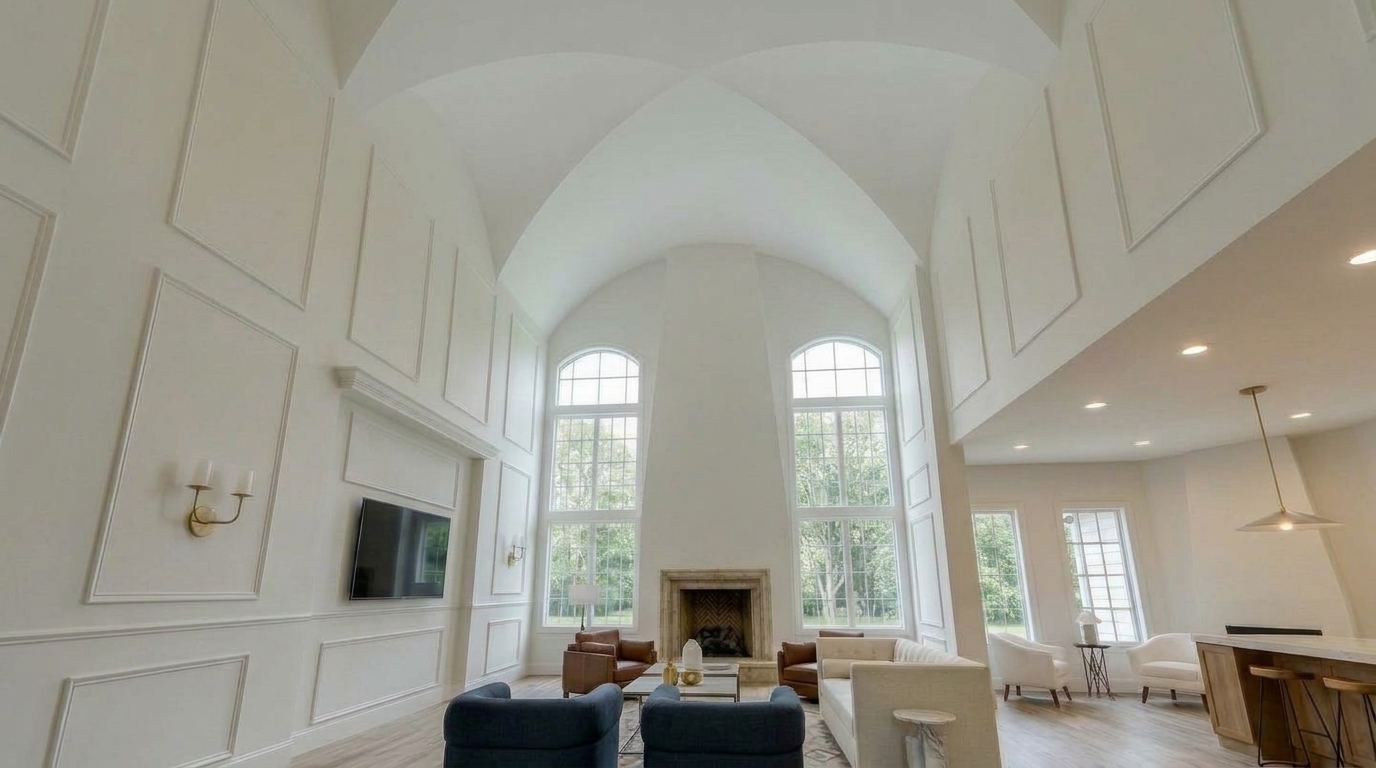
A groin vault forms where two barrel vaults intersect, creating curved sections and distinctive diagonal lines overhead. It was used in Roman buildings and became a defining feature of later medieval architecture.
Where we’d use it: Entryways, formal dining rooms, wine rooms, and statement hallways.
Why we love it: It’s a more intricate ceiling treatment that brings depth, character, and a sense of old-world architecture into a space.
05 – Coffered Ceiling
Historical influence: Ancient Greek and Roman architecture
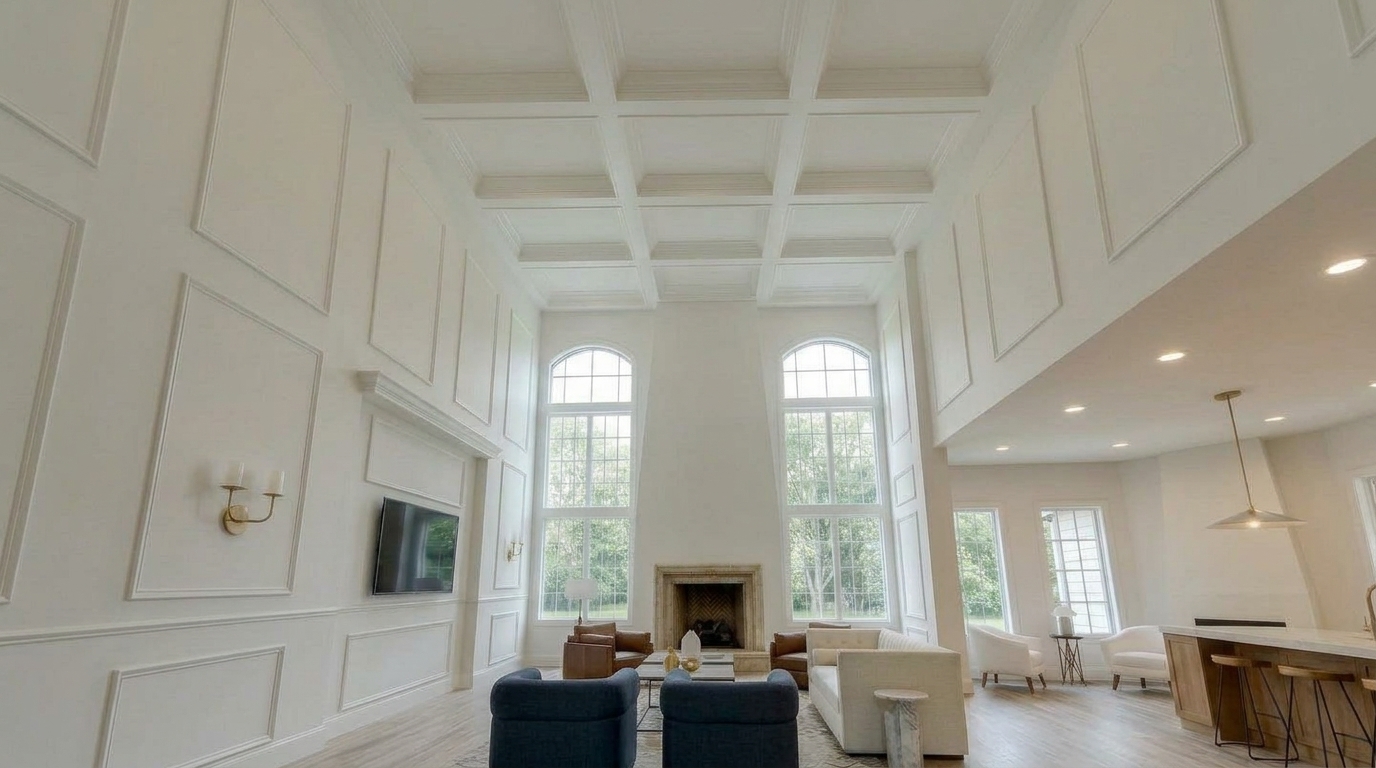
Coffered ceilings feature recessed panels, usually arranged in a square or rectangular grid. Historically, coffers helped reduce the weight of large ceilings while creating a decorative pattern.
Where we’d use it: Living rooms, dining rooms, libraries, and primary bedrooms.
Why we love it: The repeating pattern adds depth and a tailored, timeless feel. It can be traditional with stained wood or much more understated with painted finishes.
06 – Cove Ceiling
Historical influence: Classical architectural detailing
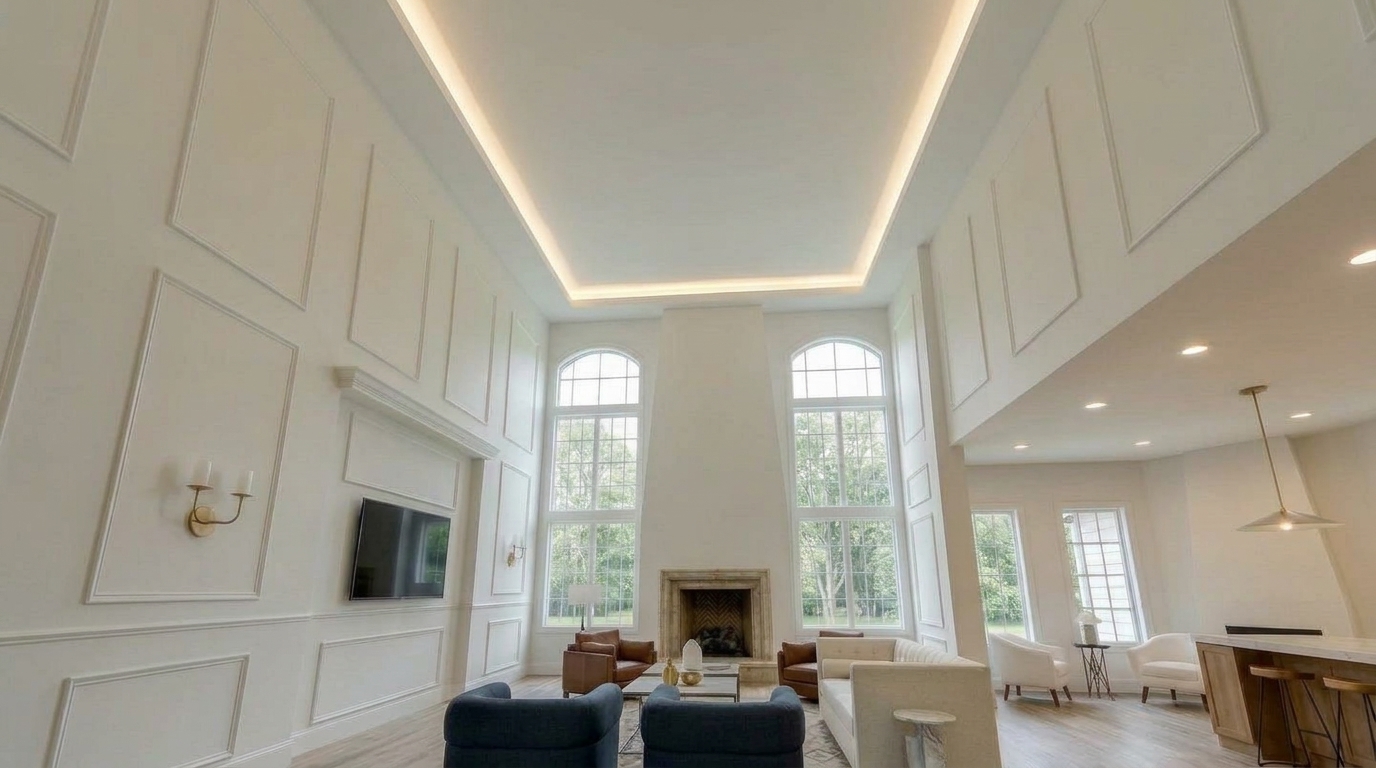
A cove ceiling uses a curved transition between the wall and ceiling instead of a sharp corner. Modern versions often incorporate concealed lighting to create a soft glow around the room.
Where we’d use it: Primary bedrooms, bathrooms, living rooms, and other spaces where a softer atmosphere makes sense.
Why we love it: It adds dimension without demanding attention, and the indirect lighting can completely change the mood of a room.
Which Ceiling Style Works Best in a Living Room?
Every ceiling style works differently depending on the room — so here’s how we think through the most common question we hear.
It depends on the feeling you’re trying to create. A vaulted ceiling can make a living room feel expansive, while exposed beams introduce warmth and character. Coffered ceilings bring a more tailored look, and cove ceilings offer a softer, understated finish.
We also consider the room’s proportions, natural light, furniture layout, and architectural style. A ceiling should complement the space rather than compete with everything happening below it.
And one detail that’s easy to overlook: ceiling designs need to be considered early. Structural framing, lighting, HVAC placement, and ceiling height can all affect what’s possible, which is why we like working through these details during the design process rather than trying to add them at the end.
Don’t Forget to Look Up
A ceiling is more than a blank surface above a room. It’s an opportunity to add character, create dimension, and make the architecture feel more intentional.
Whether it’s a dramatic vault, warm timber beams, or a simple detail that gives the room a more finished look, the right ceiling can change the entire experience of a space.
Sometimes, the detail that makes a room unforgettable is the one you almost forgot to look at.
FOLLOW US ON SOCIAL MEDIA

About Us
Structur is a full service residential design firm located in Elkhorn, NE. We specialize in creating stunning custom spaces, styling show-stopping decor, and finding hidden gems in the real estate world.




Recent Comments