
Your Home Doesn’t Have to Be One Style

Your Home Doesn’t Have to Be One Style
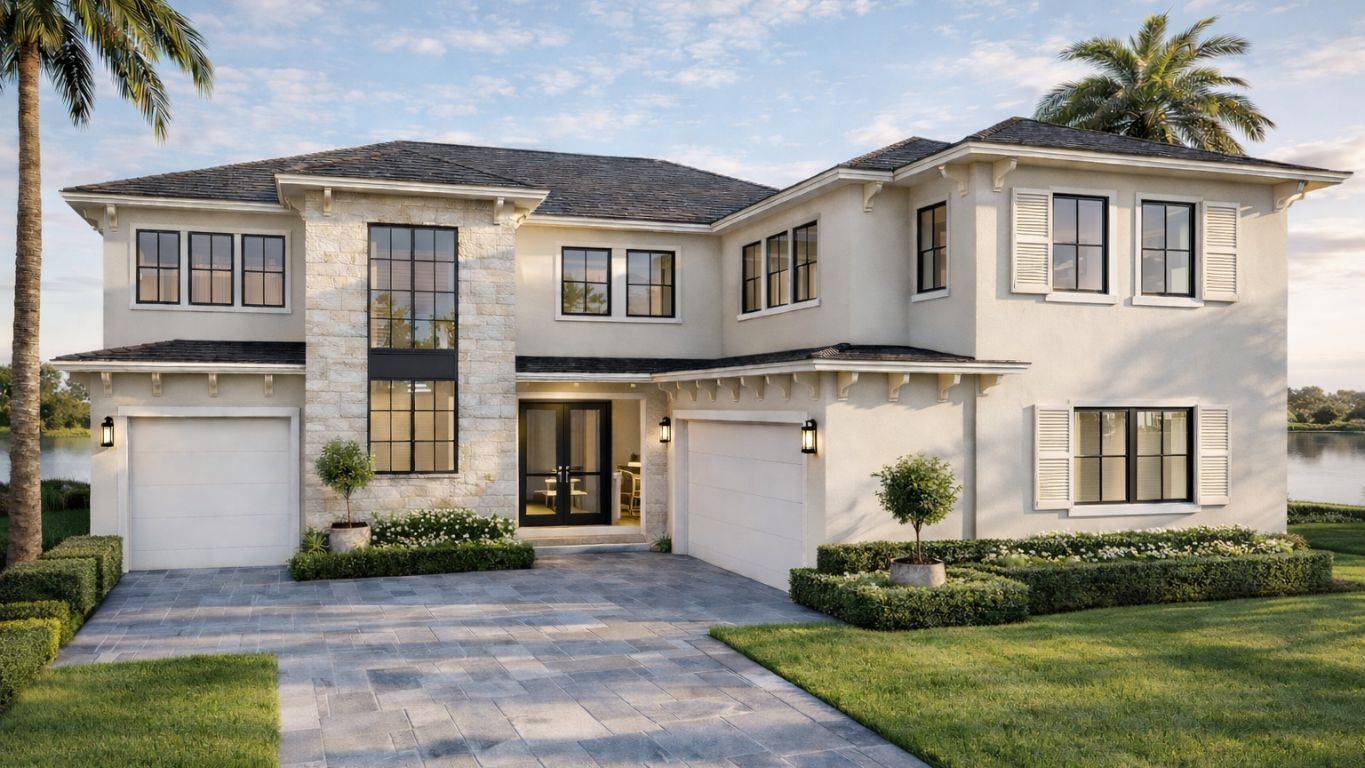
A client walked into our first meeting with her phone open to her saved photos. She’d been collecting them for months.
There was a clean, coastal modern exterior with black steel windows and limestone cladding. A craftsman kitchen with warm timber beams and handmade ceramic tile. A traditional fireplace surround in aged stone. A very contemporary light fixture — geometric, brass, completely unexpected.
She set the phone down and looked at me with the expression I recognize immediately: the one that says I know this doesn’t make sense.
“I love all of it,” she said. “But I have no idea how to make it one house.”
I told her what I tell every client who comes in with that same apology in their eyes.
It doesn’t need to be one style. It needs to be yours.
Think About the Music You Actually Listen To
Here’s the thing about style labels — modern, traditional, transitional, farmhouse, coastal — they’re useful as starting points and almost useless as finishing points. They describe a category. They don’t describe a person.
Think about the music you listen to. Your playlist might have Taylor Swift, Benson Boone, Teddy Swims, and Bruno Mars on it. Four completely different sounds. Four completely different moods. And yet you chose every single one of them for a reason — the lyrics of one, the energy of another, the way a particular song makes you feel on a Tuesday morning when you need it.
Your playlist doesn’t need to follow one genre to make sense. The common thread is you.
A home works the same way. The goal isn’t to pick a lane and stay in it. The goal is to understand what you’re actually drawn to and find the relationships between those things — because the relationships are almost always there, whether you can see them yet or not.
We Start With What You Love, Not What You’d Call It
When I sit down with a client, I’m not looking for a style label. I’m looking for patterns.
What keeps appearing in their saved photos? What do they keep coming back to without quite knowing why? Maybe it’s warm wood cabinetry showing up in kitchens they originally described as contemporary. Maybe it’s symmetry appearing in rooms they thought they wanted to feel more casual. Maybe it’s a particular kind of stone, a specific window proportion, a ceiling detail that keeps showing up across images that otherwise look completely different.
Those repetitions are the data. They tell me what the client actually responds to — as opposed to what they think they should want, or what they’ve seen enough of to recognize as a style name.
This is why I don’t hand clients a style quiz. I ask them to show me what they’ve been saving. The unedited, slightly chaotic, possibly contradictory collection of things that caught their attention over months or years of looking. That folder tells me more than any checklist ever could.
Finding the Common Thread
Here’s what’s interesting: I can look at a collection of inspiration images that appear to have nothing in common and still find the pattern within a few minutes.
Maybe it’s warmth — every image, regardless of style, has something that reads as warm. A material, a tone, a quality of light. Maybe it’s natural materials — stone, timber, linen, terracotta — showing up consistently even when the overall aesthetic shifts. Maybe it’s strong contrast. Maybe it’s a preference for things that feel collected over time rather than coordinated all at once.
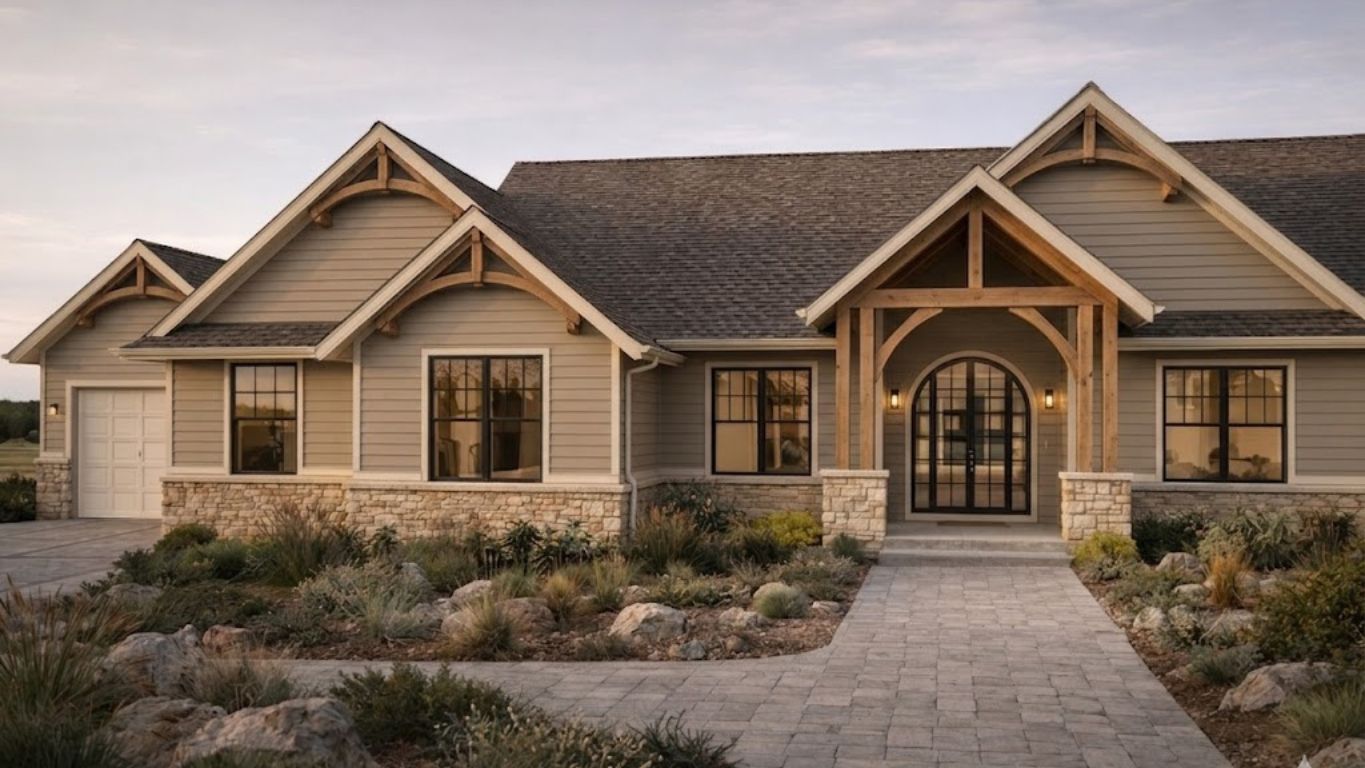
Look at the home above. Craftsman gable. Timber framing. Stone base. An arched steel door that should feel contemporary but doesn’t — it feels like it belongs exactly there. That’s not an accident and it’s not a contradiction. Those elements share an undertone: they’re all honest materials, used at a human scale, in a composition that prioritizes texture and craft over sleekness and symmetry.
That’s the common thread. Once I can name it, I can apply it across a whole house — even when different rooms lean in different aesthetic directions.
One Room Doesn’t Have to Sound Like the Next
The mistake most people make is thinking that cohesion means every room looking the same. It doesn’t. Cohesion means every room feeling like it belongs to the same home — to the same person.
A living room can lean more traditional while a kitchen feels cleaner and more contemporary. A primary bedroom can be quiet and spare while a dining room is rich and layered. Those differences are not a problem. They’re the design equivalent of different songs on the same playlist — different moods, different moments, but all chosen by the same ear.
What ties them together isn’t matching finishes or a consistent style label. It’s the underlying preferences that run through all of it: the materials that repeat in different applications, the proportions that stay consistent even when the surfaces change, the palette that shifts in tone but not in temperature.
The goal isn’t to make everything match. It’s to make everything feel like it belongs.
The Details Make the Home Personal
Some of the most memorable homes I’ve designed have included combinations that wouldn’t survive a standard style audit. A traditional fireplace in a room with contemporary furniture. A classic exterior with a very modern interior. A dramatic stone that becomes the focal point in an otherwise restrained palette.
Those combinations work when they’re grounded in the client’s actual preferences — when there’s a logic to them even if that logic isn’t immediately legible to someone else.
This is also why I don’t simply take everything from a client’s inspiration board and put it in the house. My job is to understand what they love about each image and translate that into the larger design. Sometimes the exact element belongs. Sometimes it’s the color, the proportion, the material, or the feeling behind it that belongs — and the specific object is just the vehicle that got us there.
The goal isn’t to say yes to everything. It’s to make sure the things we do say yes to feel intentional — like they were chosen, not accumulated.
The Home That Sounds Like You
The best homes don’t always have an obvious style label. They have something harder to name and more valuable: they feel like the person who lives in them.
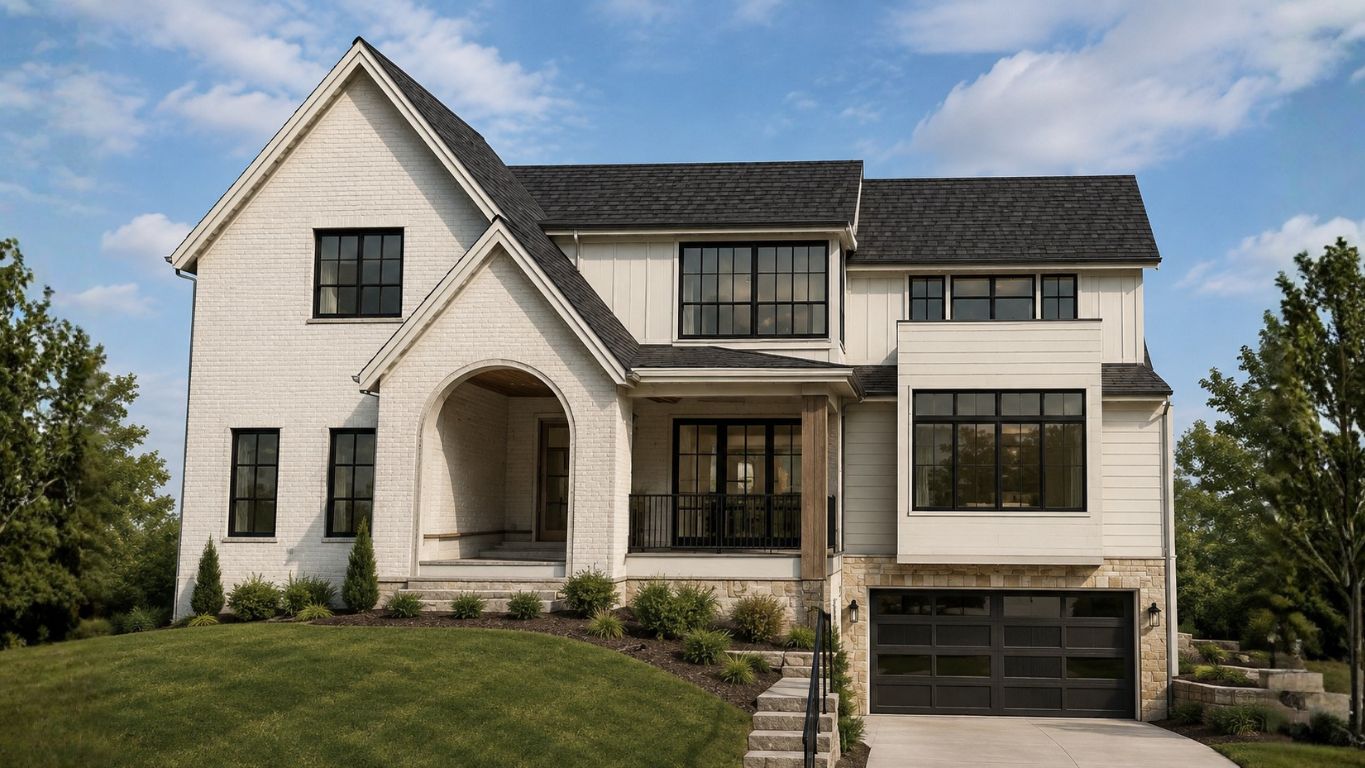
The home above doesn’t fit neatly into one category. White painted brick that reads as traditional. Board and batten that reads as farmhouse. An arched porch entry that reads as classical. A dark garage door and black window frames that read as contemporary. By every style checklist, it should be confused. Instead it’s completely resolved — because every element shares the same underlying sensibility, even when the specific references diverge.
That’s what happens when design starts with preferences rather than labels.
If your inspiration folder feels like it doesn’t make sense, that’s not a problem to apologize for. In fact, it may tell me more about your style than a perfectly coordinated collection of images from one aesthetic ever could. The contradictions are where the interesting work happens.
You don’t need to choose one designer, one aesthetic, one genre, and build your entire home around it. You need to understand what you love, and why you love it. The rest is translation — and that’s exactly what I’m here for.
Your home should sound like you. Not like a category. Not like a trend. Not like the last house you saw that made you think maybe that’s my style.
Like you.
FOLLOW US ON SOCIAL MEDIA

About Us
Structur is a full service residential design firm located in Elkhorn, NE. We specialize in creating stunning custom spaces, styling show-stopping decor, and finding hidden gems in the real estate world.




Recent Comments