
The Unsung Hero of the House

The Unsung Hero of the House

Nobody walks into a home and says, “I can’t wait to see the laundry room.”
And yet — we probably spend more time in there than we realize.
It’s where the school uniforms end up. Where muddy shoes get dropped. Where towels pile up, sheets get folded, packages get opened, and the dog somehow manages to leave half the backyard on the floor.
The laundry room quietly handles a lot.
So why do we so often treat it like the leftover room — the space that gets whatever square footage is left after everything else has been figured out?
When we’re designing a custom home, the laundry room is one of those spaces where a little planning makes everyday life noticeably easier. It doesn’t need to be the biggest room in the house or the most expensive. It just needs to work incredibly well.
Because when a room handles this much of your daily life, function is a luxury.
Start With What Actually Happens in There
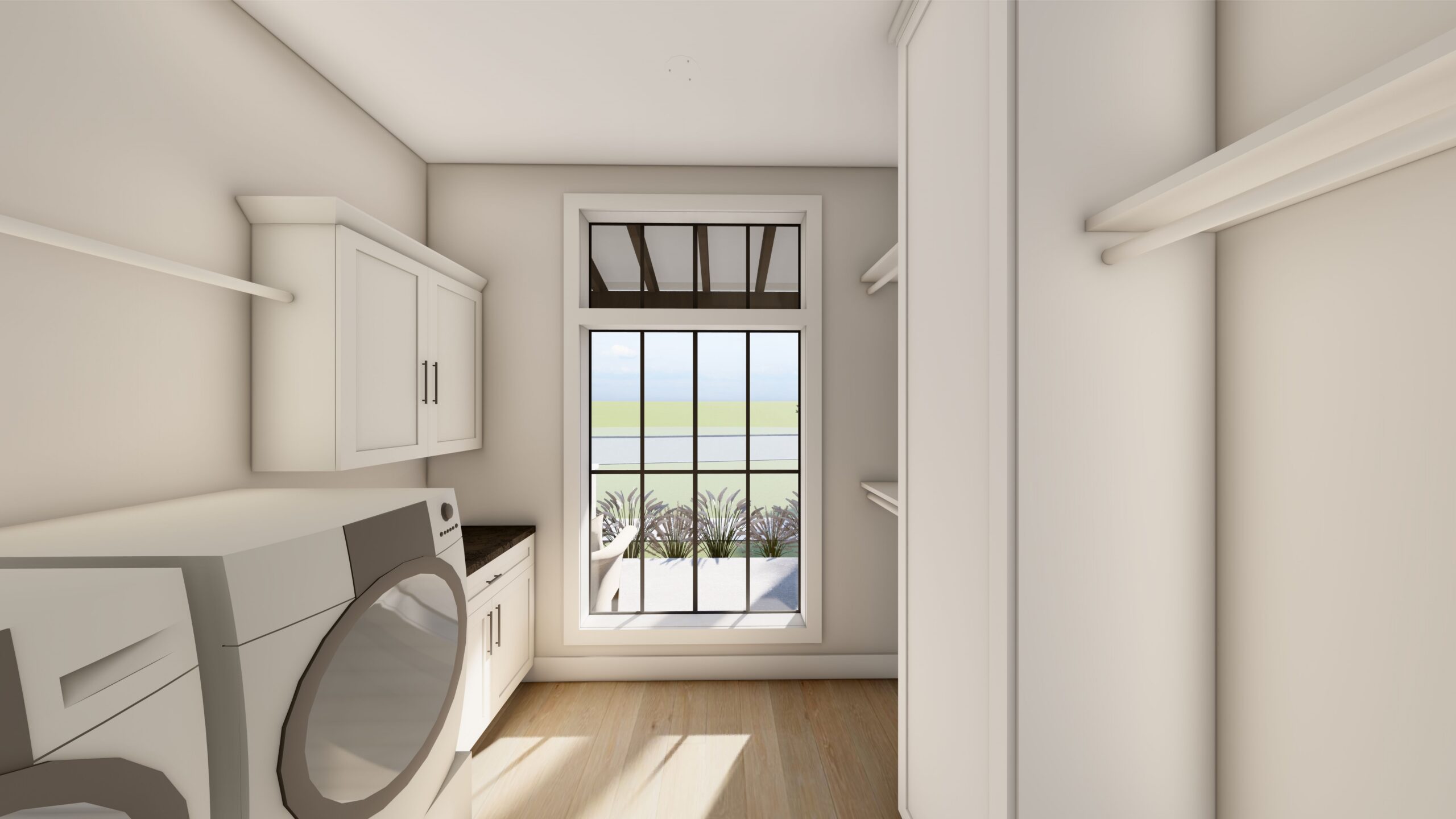
The first question isn’t where the washer and dryer should go.
It’s what happens before and after laundry.
Where do dirty clothes come from? Do they travel from bedrooms upstairs, accumulate in a mudroom, or arrive from multiple family members at once? Where do the clean clothes go when they’re finished? Are you folding everything in the laundry room, or carrying it somewhere else to deal with?
These questions can completely change the layout.
For a family with young children, a laundry room near the bedrooms often makes the most sense — the dirty clothes don’t travel far and neither does the clean laundry once it’s done. For another household, having the laundry room connected directly to the mudroom may be far more practical, because that’s where the outdoor gear, the muddy clothes, and the dog towels tend to accumulate regardless of where the laundry room is.
There isn’t one perfect laundry room. There’s the right laundry room for your routine. And the difference between designing one and simply placing one is understanding that distinction before a single wall goes up.
The Washer and Dryer Aren’t the Whole Room
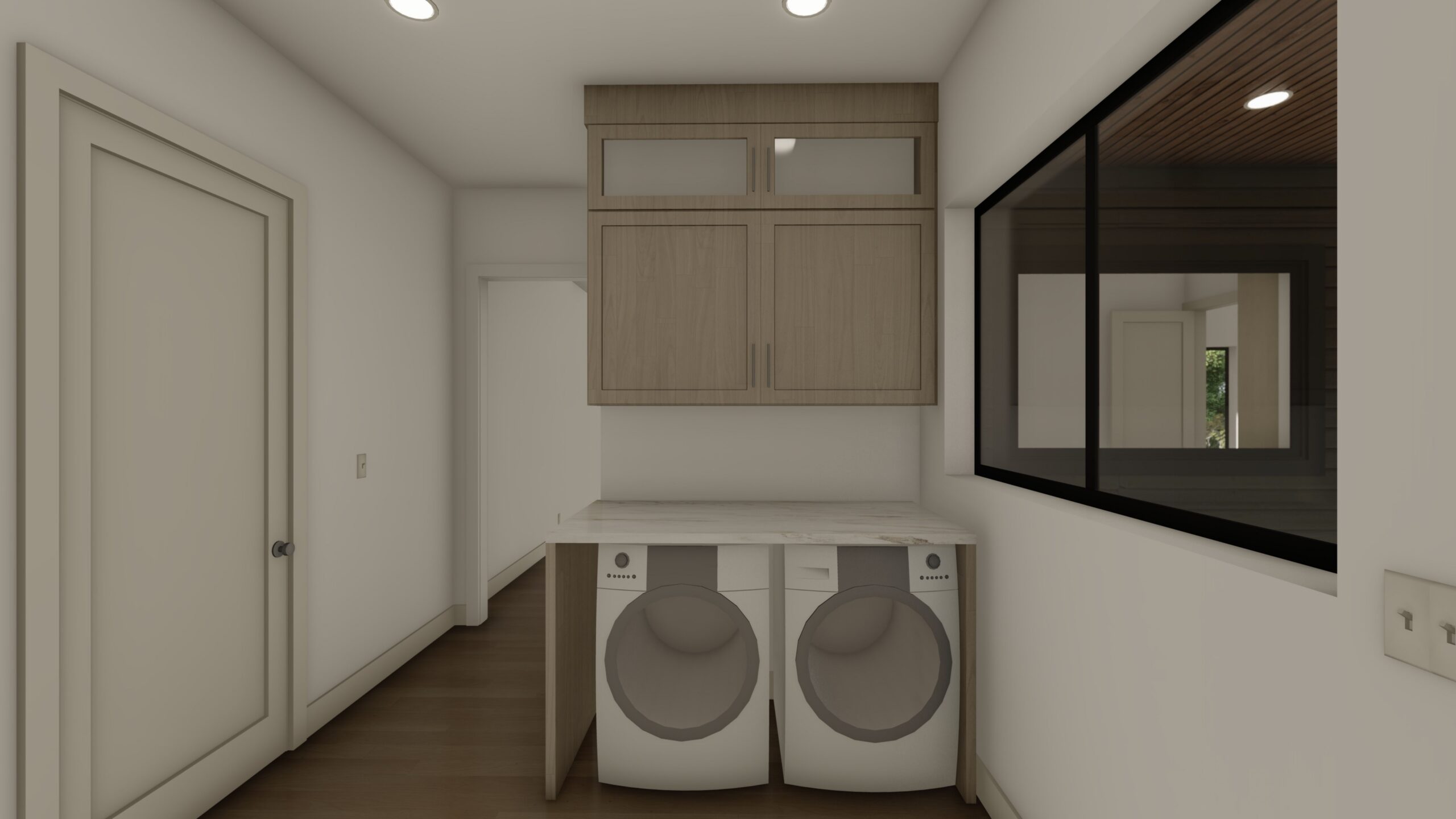
One of the most common mistakes we see: the machines take up nearly all of the usable space and the laundry comes out of the dryer with nowhere to go.
A well-designed laundry room gives you somewhere to do something with the clothes once they leave the machines. That might mean a folding counter directly above front-loaders. A hanging rod within reach of the dryer. A drying rack that pulls out when you need it and disappears when you don’t. Or simply enough clear counter space to sort and stack without immediately carrying everything to another room.
This is also where the room’s layout rewards early planning. If we know the machines are front-loading, we can design a counter that sits directly above them — gaining a full work surface without adding any additional footprint. If we know someone hand-washes frequently, we can position the sink where it actually gets used. These decisions are straightforward early in the process and expensive to change later.
Give the Everyday Stuff a Home
Laundry rooms collect an impressive number of things that don’t have an obvious home anywhere else in the house.
Detergent. Stain remover. Cleaning supplies. The iron. The steamer. Extra towels. Baskets. Vacuum attachments. Pet supplies. The things that accumulate in a utility space because there’s nowhere else for them to go.
None of these are particularly beautiful, but they all need somewhere to live.
Look at the room above. Floor-to-ceiling cabinetry keeps everything out of sight while the room stays calm and considered. The butcher block counter sits directly above the machines — turning what would have been dead space into the primary folding surface. The farmhouse sink is within arm’s reach without dominating the layout. The herringbone tile floor gives the room its own personality rather than letting it read as purely functional.
That’s the difference between storage that was added and storage that was designed. Deep drawers for laundry baskets. Upper cabinets for less-used items. A hanging rod positioned so freshly dried shirts go directly on hangers rather than across the room. None of these are complicated ideas — they just require thinking about the room before anything is built rather than after.
Good storage isn’t about having more cabinets. It’s about having the right storage in the right place.
Don’t Skip the Sink
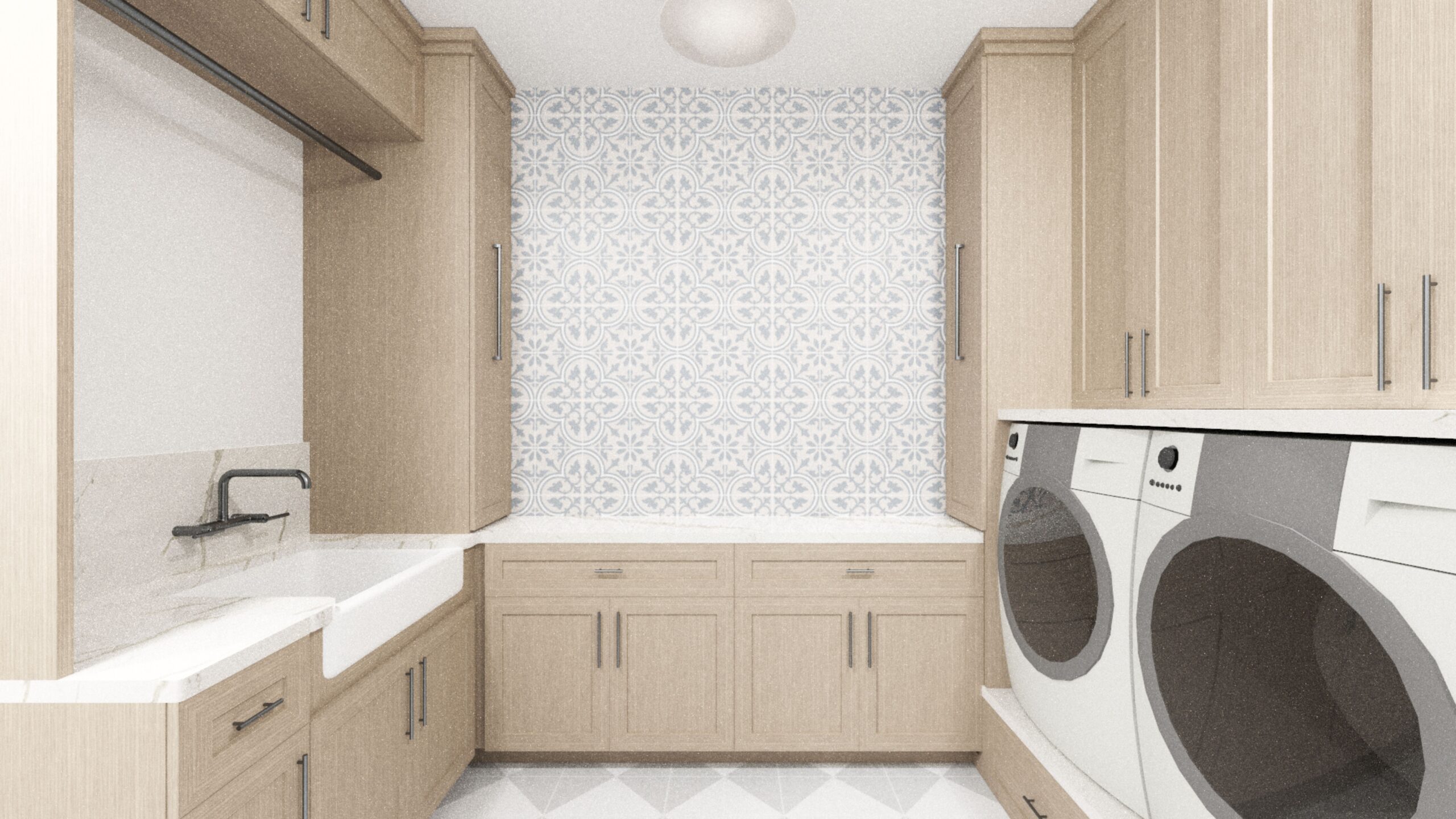
A laundry sink may not sound glamorous. It becomes one of those features you wonder how you ever lived without.
It’s the place for soaking stained clothes before they go in the machine. For rinsing muddy shoes without taking them to the kitchen. For washing paintbrushes, cleaning pet items, or handling anything you’d rather keep out of the spaces where food gets prepared. In a home with children or animals — which is most homes — the laundry sink quietly earns its place every single week.
The room above shows it done well. The farmhouse sink is built into a run of cabinetry with counter on both sides — which means there’s actually room to work at it, not just reach into it. The patterned tile backsplash behind the folding area gives the room a focal point. The globe pendant overhead makes the room feel considered rather than utilitarian.
Size and placement matter here. A sink tucked into an awkward corner with no counter space beside it is barely more useful than no sink at all. Position it where it connects to the workflow of the room — near the machines, with clear counter on at least one side — and it becomes something you use daily without thinking about it.
And Yes, It Can Be Beautiful
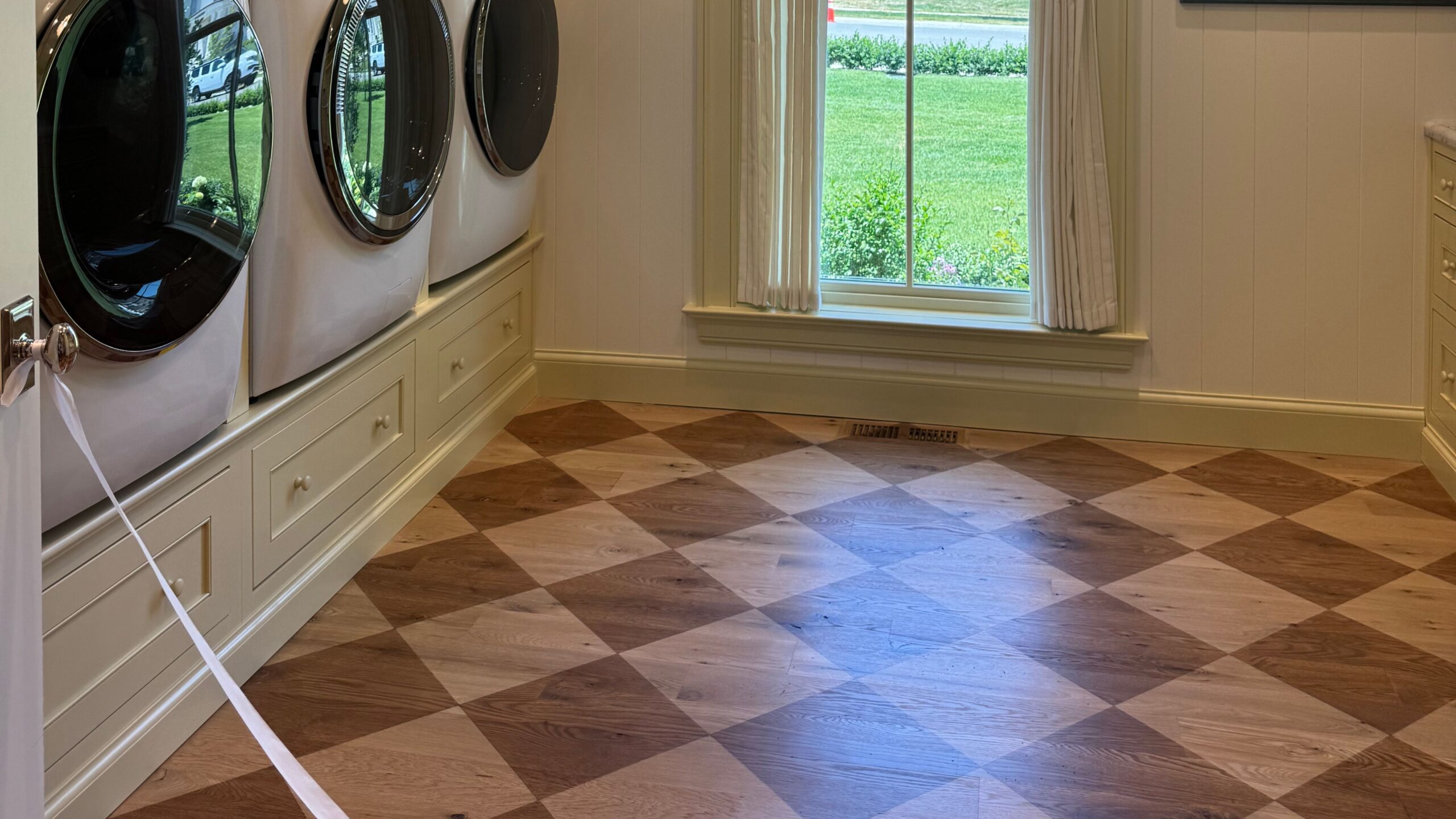
We think laundry rooms deserve real design attention. Not because doing laundry should feel glamorous — it doesn’t, and no amount of design changes that — but because a room you use this often deserves to feel like it belongs in the home rather than being apologized for.
Look at this room. Cream cabinetry running floor to ceiling, matching the trim and the wainscoting in a single tone so the room feels quiet and complete rather than busy. The machines raised on a platform with drawer storage below — solving both the ergonomic problem of bending down repeatedly and the storage problem simultaneously. A two-tone wood checkerboard floor that makes the room a destination rather than a utility corridor. Scallop pendants that treat the room like any other room in the house. A piece of art on the wall, a garden view through the window, a curtain that pools at the floor.
This room didn’t happen accidentally. Someone thought about it with the same care they gave the kitchen and the primary bath. And the result is a laundry room that a guest would stop and notice — not because it’s excessive, but because it’s genuinely considered.
That’s the goal. Not to make laundry glamorous. To make the room feel like it belongs.
The Little Details That Add Up
Some of our favorite laundry room decisions are the ones you might not notice immediately.
Where the outlets are placed — and whether there’s one in a useful location rather than behind the machine you can never reach. How the door swings and whether it blocks the machines or the counter when it’s open. Whether there’s enough clear floor space to stand comfortably in front of the dryer when it’s fully open. Where the hanging rod sits relative to the dryer — because if it’s on the opposite wall, the clothes end up draped over the machine while you walk across the room. How high the counter is relative to the machines. Whether the cabinet next to the washer can actually open when the washer door is also open.
None of these decisions are glamorous.
But put them all together and they determine whether the room feels like it was designed for the person using it, or designed around the appliances and then hoped for the best.
That’s the difference between designing a laundry room and simply putting a washer and dryer in a room.
The Room You Don’t Think About Until You Need It
The best laundry rooms don’t necessarily make you stop and stare. They make you notice how easy everything feels.
There’s somewhere to put the dirty clothes. Somewhere to fold the clean ones. Somewhere to hang the things that can’t go in the dryer. Somewhere for the detergent, the dog towel, the stain remover, and the things that always end up in the laundry room anyway because that’s simply where they belong.
And suddenly, a room you barely thought about during the design process becomes one of the rooms you appreciate most once you’re actually living in the house.
That’s why we call it the unsung hero.
It doesn’t need to be the star of the home. It just needs to show up every day and do its job beautifully.
Because sometimes the best luxury in a home isn’t something you see.
It’s something that makes Tuesday afternoon feel a little easier.
FOLLOW US ON SOCIAL MEDIA

About Us
Structur is a full service residential design firm located in Elkhorn, NE. We specialize in creating stunning custom spaces, styling show-stopping decor, and finding hidden gems in the real estate world.



Recent Comments