
Spill the Tea on the Floor

Spill the Tea on the Floor
You can have the most beautiful kitchen, the perfect paint color, and a piece of stone you waited four months to find.
And still make the room feel completely wrong with the wrong floor.
We’ve watched it happen. A flooring pattern that felt beautiful on a sample card becomes overwhelming when it covers an entire room. A wood tone that looked warm and inviting under showroom lighting suddenly pulls orange next to the cabinetry. Two materials that seemed like they’d work perfectly together look surprisingly disconnected once they’re actually sitting side by side in the same house.
That’s because choosing flooring isn’t really about picking the prettiest option in the showroom.
It’s about knowing what the floor is doing for the room. Does it add movement? Quiet things down? Make a space feel larger? Give a hallway some personality? Let the architecture take center stage?
And then there are the questions nobody puts on the flooring sample: Herringbone or chevron? Wide plank or straight lay? Oak or walnut? Stone or wood? And where does each one actually make sense?
So we’re spilling the tea.
Here are the flooring patterns and materials we love, where we’d use them, and the things we’d want you to know before you commit to one.
Herringbone: The Classic That Has a Personality
Classic · Architectural · A little dramatic
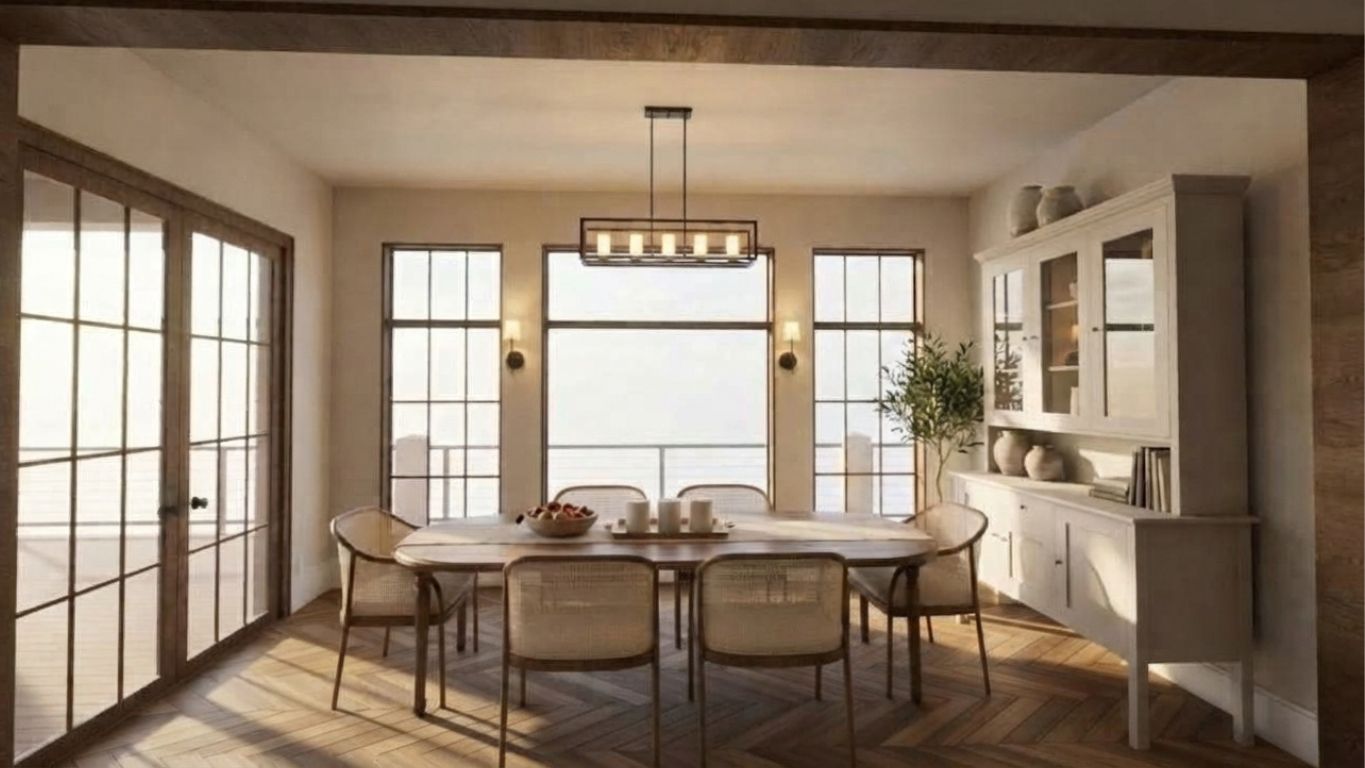
Herringbone is one of those patterns that can make a room feel finished before you’ve even moved the furniture in.
Look at the dining room above. The cane chairs, the warm wood frames, the soft afternoon light — everything in this room is working gently together. And running beneath all of it is a herringbone floor that creates movement and warmth without asking for attention. It doesn’t shout. It holds. The angled boards draw the eye through the room without competing with the view beyond or the chandelier above. That’s the thing about herringbone done well: you feel it before you consciously notice it.
Our favorite wood for it: white oak and European oak are incredibly versatile, but walnut is hard to beat when you want something moodier. The same pattern in pale ash feels relaxed and European; in dark walnut it feels like a library in a French country house.
Where we’d use it: Entryways, dining rooms, living rooms, studies — anywhere it has room to breathe. Herringbone can work beautifully in a smaller room, but we usually like giving it space. If the floor is already doing something interesting, the rest of the room doesn’t need to compete.
The tea: Herringbone is a classic for a reason. Just don’t treat it like a neutral. It has a point of view — and a strong one.
Chevron: Herringbone’s More Directional Cousin
Streamelined · Dramatic · Confident
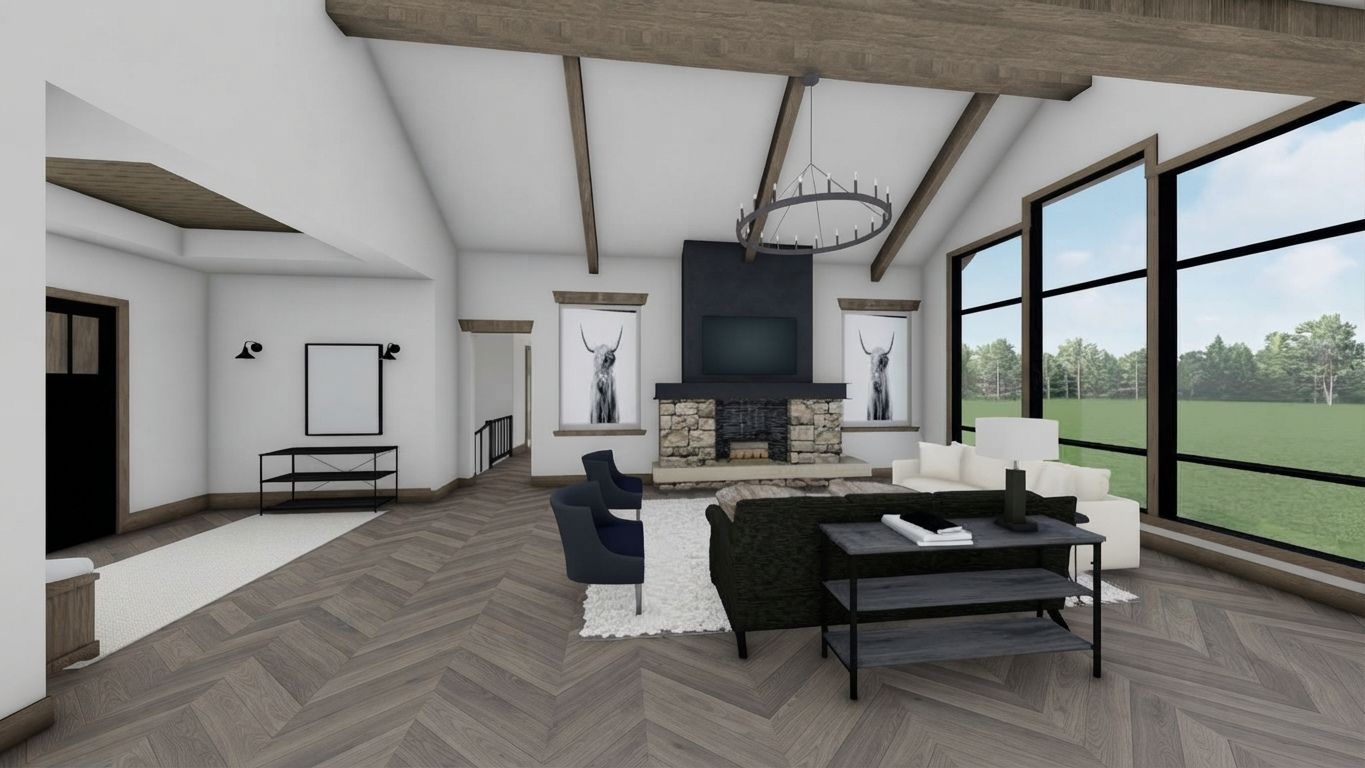
At first glance, chevron and herringbone can look almost identical. The difference is subtle but it changes everything.
In herringbone, the boards meet at a right angle — creating a staggered, zigzag effect. In chevron, the boards are cut at a precise angle so they meet at a perfect point, creating a continuous V that moves the eye in one clean direction. That single difference makes chevron feel more tailored, more deliberate, more like it arrived knowing exactly what it was doing.
In the room above, the dark walnut chevron is pulling serious weight. The stone fireplace is already dramatic. The steel window wall is already architectural. The timber beams are already doing a lot. And the floor keeps up with all of it — not by being subtle, but by being equally committed. Cool-toned walnut chevron against a stone fireplace and black surround is one of those combinations that takes genuine confidence to specify and looks completely resolved once it’s in.
Where we’d use it: Long entryways, dining rooms, formal living spaces — anywhere the eye naturally moves through the room and the floor can guide it. The directional quality of chevron works especially well in rooms with a clear focal point.
The tea: If herringbone is the effortlessly dressed classic, chevron is the one who showed up knowing exactly what they were doing.
Straight-Lay Hardwood: The Great Supporting Actor
Simple · Classic · Endlessly adaptable
Straight-laid hardwood doesn’t have the drama of herringbone or chevron. It doesn’t need it.
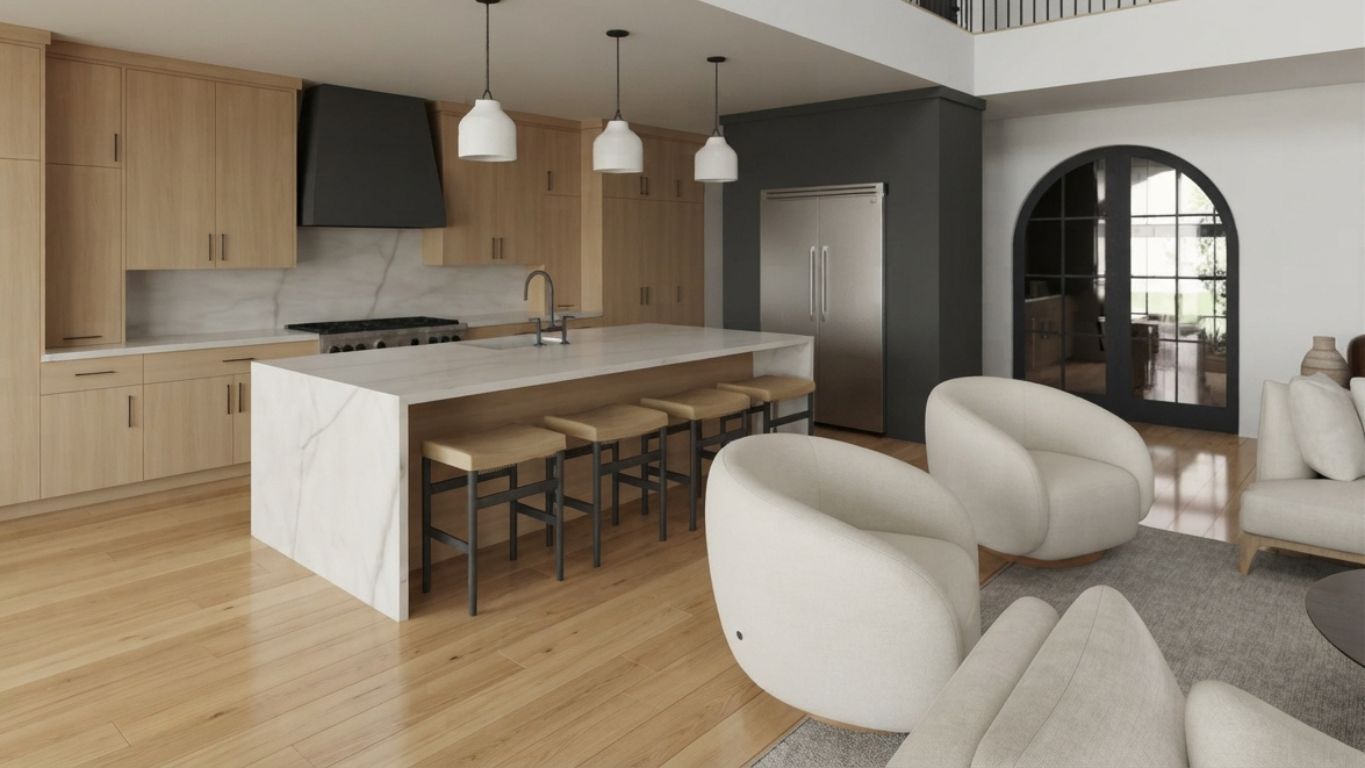
Think of it as the great supporting actor — the floor that makes every other decision in the room look more intentional. The room above has a lot happening: a double-height ceiling, oak cabinetry that needs to breathe, a marble island that wants to be the surface story, a black range hood that’s already making a statement, an arched door that earns a second look. A patterned floor in this room would be competing for attention it doesn’t need.
The pale straight-lay oak holds all of it without adding noise. It’s warm enough to complement the cabinetry. It’s light enough to let the ceiling height do its job. It runs through the entire open plan without interruption — which is exactly how you keep an open-concept space from feeling like three separate rooms pushed together.
Don’t confuse simple with basic. A beautifully selected oak with the right stain and finish, running in long boards through a well-proportioned room, can be far more sophisticated than an elaborate pattern that doesn’t belong there.
The tea: If you’re already spending your design budget on gorgeous cabinetry and a slab of stone you can’t stop thinking about, a quieter floor might be exactly what the room needs.
Wide-Plank Hardwood: Quiet, But Never Boring
Warm · Natural · Timeless
This is where things get genuinely warm.
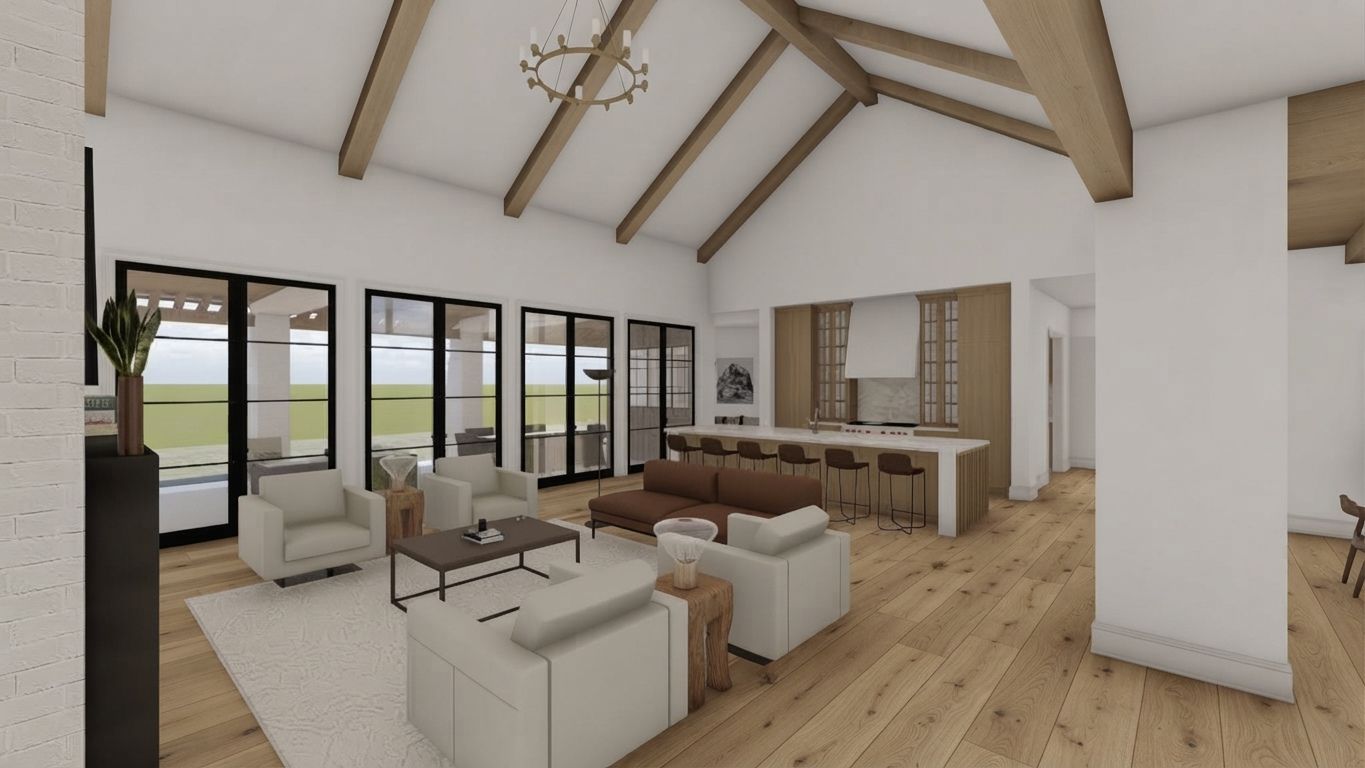
Wide-plank hardwood in a warm oak tone — the kind running through the room above — does something that narrower boards and patterned floors rarely do: it makes a room feel lived in before you’ve even furnished it. The wider the board, the more of the natural grain and variation you see. The fewer the seams, the more the floor reads as a single continuous surface rather than a collection of pieces.
In a room with vaulted ceilings and exposed timber beams, that continuity is everything. The floor and the structure belong to the same conversation — both warm, both natural, both honest about what they are. The open plan running from living to kitchen reads as one room rather than two because the floor doesn’t stop. It just keeps going.
This is also one of our favorite choices when the home already has a lot happening architecturally. The beams, the steel doors, the open plan — all of it has personality. The floor’s job is to ground it all without adding another layer of complexity.
Where we’d use it: Great rooms, open-concept living and kitchen plans, dining areas, and anywhere the architecture is already speaking clearly and the floor should listen rather than talk.
The tea: Sometimes the most luxurious choice is knowing when not to add another pattern. Wide plank doesn’t need help being interesting. It just needs room.
Large-Format Stone: Let the Material Do the Talking
Quiet · Expansive · Architectural
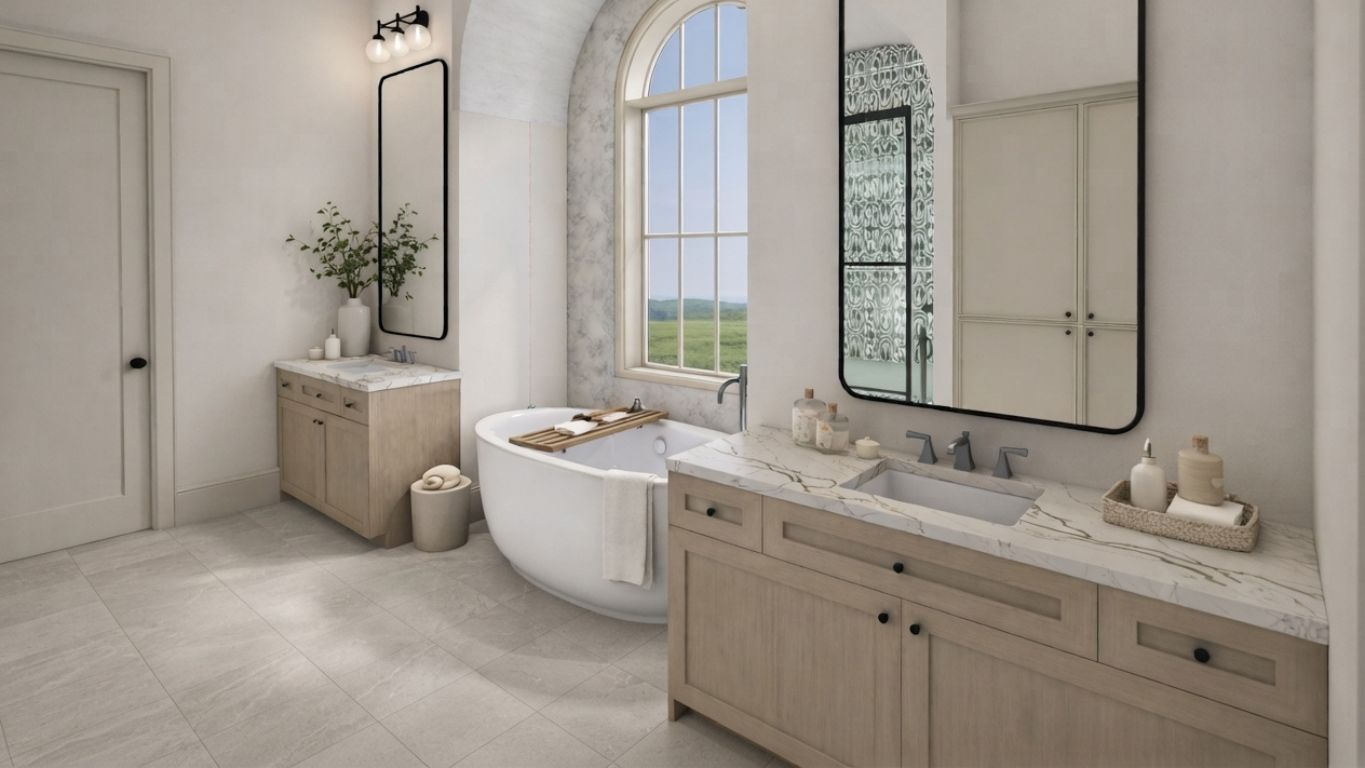
Large-format stone is almost the opposite of chevron. Instead of creating a strong geometric pattern, it allows the material itself to become the focus.
The bathroom above makes the case quietly and completely. Large grey stone tiles running wall to wall, clean and continuous — and because there are fewer grout lines interrupting the eye, the floor reads as one expansive surface. The freestanding tub floats on top of it. The arched window frames the view. The oak vanities bring warmth. The marble counter adds a surface moment. Everything has room to be itself because the floor isn’t adding a pattern to navigate — it’s simply being the ground.
This works especially well when the stone has beautiful variation: veining, texture, subtle shifts in tone across tiles. Those details give the floor character without needing geometry to do it. The material is doing the work. The job is to stay out of its way.
Our favorite materials: limestone, travertine, marble, and high-quality stone-look porcelain that handles wet zones without sacrificing the look.
The tea: If the stone is beautiful enough, stop trying to make it more interesting. The most confident decision is sometimes the one that trusts the material completely.
Checkerboard Stone: A Little Drama Never Hurt
Graphic · Memorable · Instantly its own moment
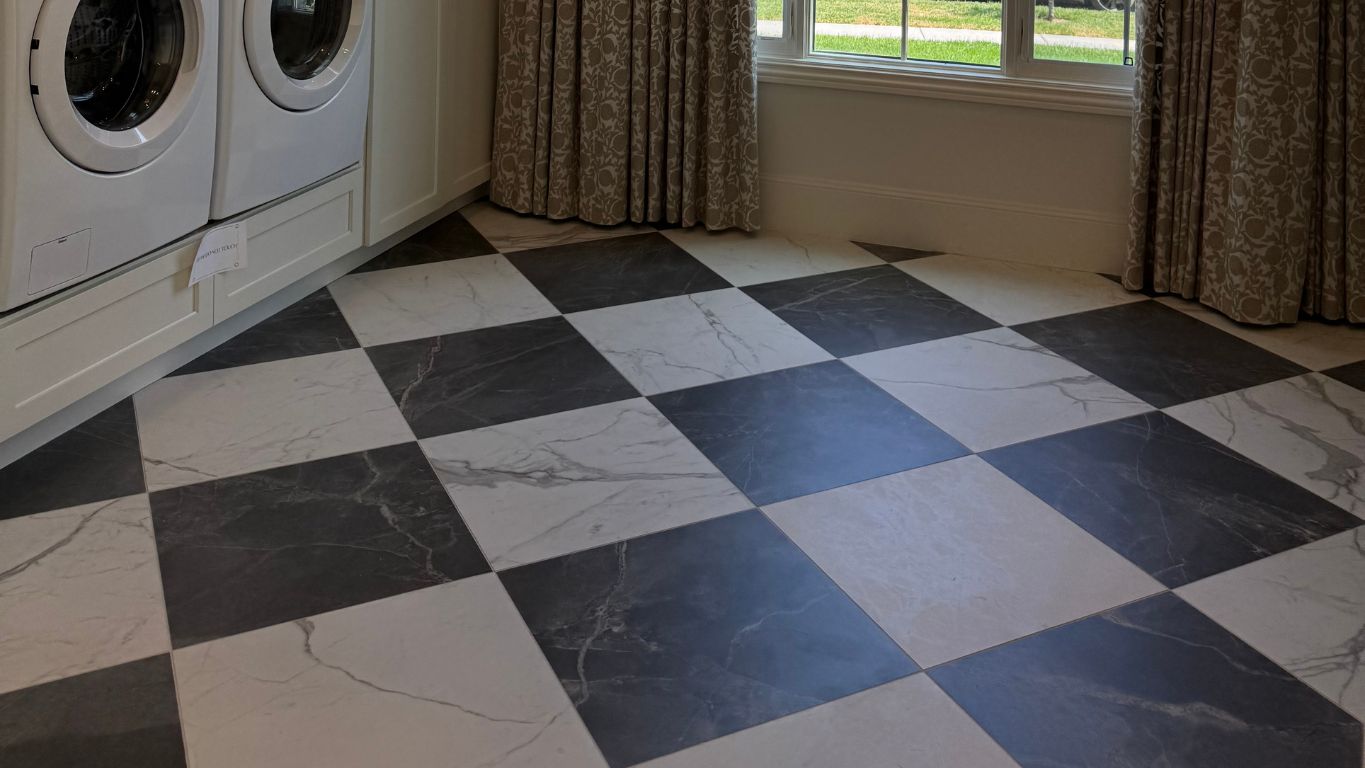
Here is a laundry room.
Not a bathroom. Not a grand entry. A laundry room — with a vaulted ceiling, an iron lantern, linen drapes that pool at the floor, and a black and white marble checkerboard that makes the whole thing feel like it belongs in a French country estate rather than at the back of a new build.
That’s what the right flooring decision does to a utilitarian space. It elevates it from functional to intentional. You walk in to switch the laundry and you notice the floor first. And then you notice that everything in the room looks better because of it — the warm cream walls, the white cabinetry, the mountain view through the window. The checkerboard is doing all of that.
This is one of our favorites because people play it too safe in exactly these rooms. A hallway. A powder room. A mudroom. A laundry room. These are the spaces guests pass through, the rooms that set a tone before anyone arrives at the main event. They deserve as much thought as the kitchen — and sometimes, a pattern that would feel overwhelming in a larger room is exactly right in a smaller one.
A black and white marble checkerboard reads as crisp and graphic. A softer combination of warm limestone and ivory reads as more relaxed and European. The pattern is the same. The mood is entirely different.
The tea: If you’re going to have a little fun with flooring, this is the place. The room is small enough that the commitment isn’t enormous and the impact is immediate.
The Final Spill
There is no single best flooring pattern.
Herringbone might be exactly right for a dining room and completely wrong for a double-height open kitchen. Wide-plank warm oak might be the answer for a great room that already has everything it needs. Chevron in dark walnut might be the statement a stone fireplace and steel windows deserve. A checkerboard might be exactly what a laundry room has been waiting for.
But here’s the thing nobody tells you before you start picking samples: the floor you choose for one room doesn’t exist in isolation. It exists next to the floor in the next room, and the room after that. The biggest flooring mistake we see isn’t choosing the wrong pattern — it’s choosing every floor room by room, without thinking about what happens when you walk from one into the other.
Before you commit to anything, lay your samples next to each other. Not just next to the cabinetry and the stone — next to each other. Ask whether they belong together, not just whether they’re individually beautiful. That’s a much better question. And it’s the one that determines whether your home feels cohesive or just well-decorated one room at a time.
The best flooring decisions aren’t the ones that make the biggest statement on a mood board. They’re the ones that make the entire home feel more intentional.
We’ll always have our favorites.
But the real tea?
The best floor is the one that makes everything around it look better.
FOLLOW US ON SOCIAL MEDIA

About Us
Structur is a full service residential design firm located in Elkhorn, NE. We specialize in creating stunning custom spaces, styling show-stopping decor, and finding hidden gems in the real estate world.


Recent Comments